Hosepipe restrictions have been in force across the South East since early July, with no end date in sight. For anyone with a garden, the practical question is no longer how often to water, but what a drought resistant lawn actually looks like when watering is off the table.
The honest answer is that no lawn is drought proof. Every lawn will show stress in a long dry spell. What varies enormously is how quickly it happens, how bad it gets, and how well the lawn recovers once rain returns.
Why ordinary grass gives up first
A conventional amenity lawn is a monoculture of grasses bred for appearance and wear, not for surviving without water. Their roots sit relatively shallow in the top few inches of soil, which is exactly the layer that dries out first. Once that layer goes, the lawn browns off within days.
It usually recovers. Dormancy is a survival strategy, not death. But a lawn that spends July and August the colour of a doormat is not what most people wanted when they laid it.
What makes a lawn genuinely drought resistant
Four things do most of the work:
- Rooting depth
- Deeper roots reach moisture that shallow-rooted grass cannot
- This is the single biggest factor, and it is mostly determined by what you planted rather than what you do afterwards
- Species mix
- A mix of species with different rooting habits spreads the risk
- When one struggles, another holds on
- A monoculture has no such fallback
- Soil
- Compacted soil sheds water rather than absorbing it
- Aeration and decent organic matter make a real difference to how much of any rainfall actually reaches the roots
- Mowing height
- Cutting at 50mm or higher shades the soil surface and slows evaporation
- Scalping a lawn in a drought is the fastest way to lose it
Three of those four are about how you set the lawn up, which is why species choice matters far more than watering technique.
Where clover comes in
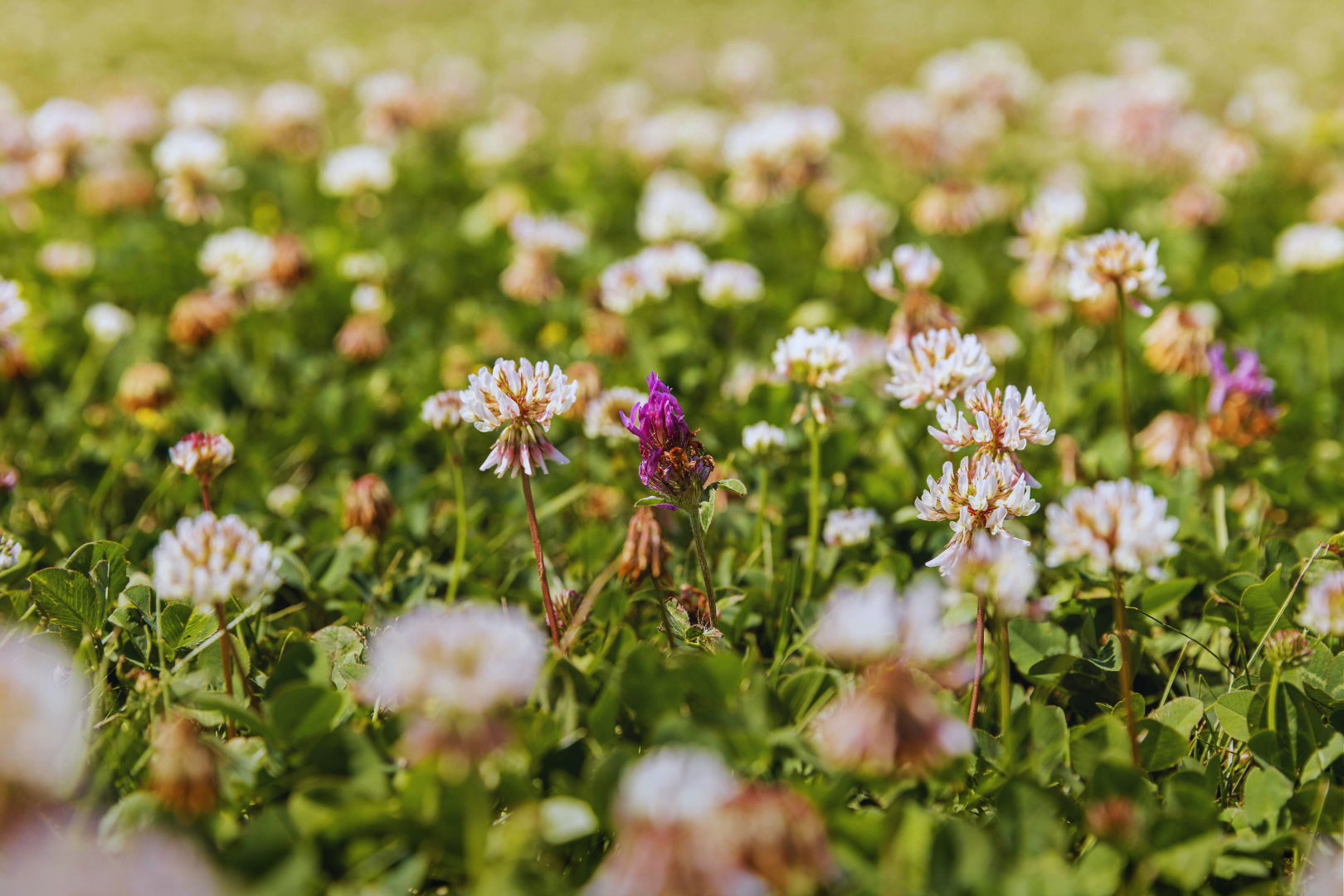
Clover roots considerably deeper than lawn grass, and that is the whole reason it stays green when the grass around it browns. It is not a marketing claim, it is a difference in root architecture.
Our Clover Plus turf uses DoubleRoot, a hybrid of white clover and Caucasian clover developed by Germinal. Ordinary white clover spreads through above-ground runners, which are exposed and vulnerable in a dry spell. DoubleRoot also produces rhizomes below the soil surface, so it has a second means of holding on and spreading when conditions are against it. Germinal rates it for drought tolerance and for cold down to -30°C.
Paired with grass rather than replacing it, that gives you a lawn that functions like a lawn, with a component in it that keeps going when the grass has stopped.
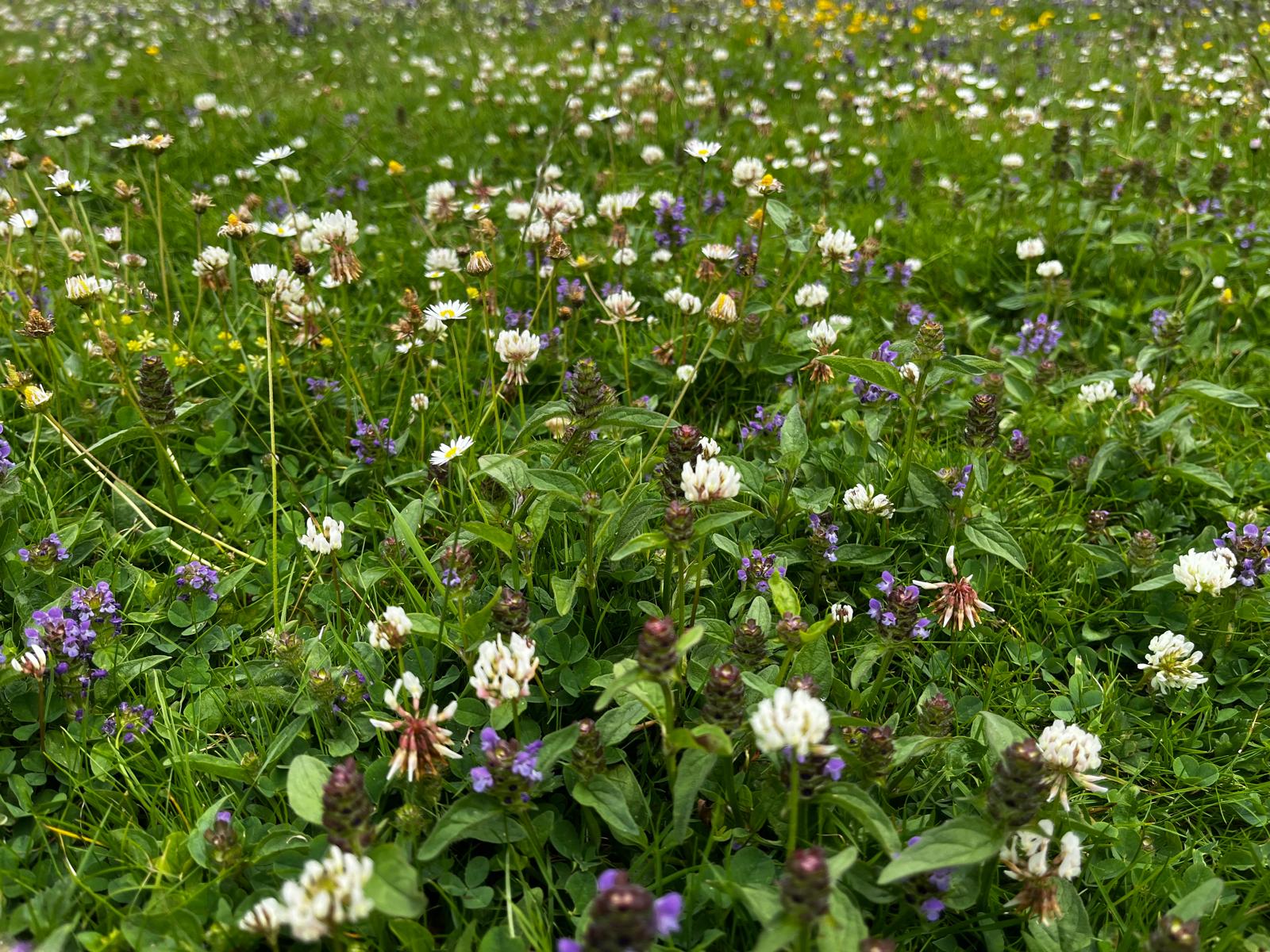
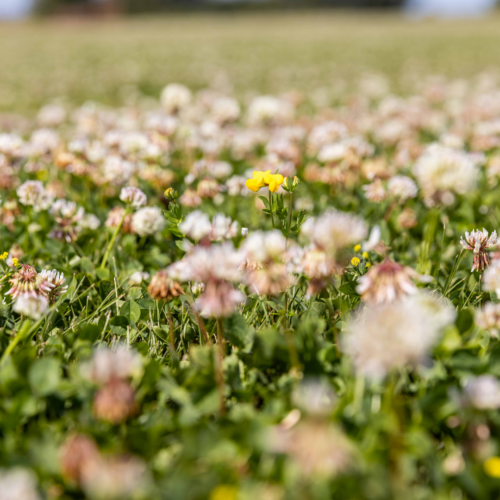
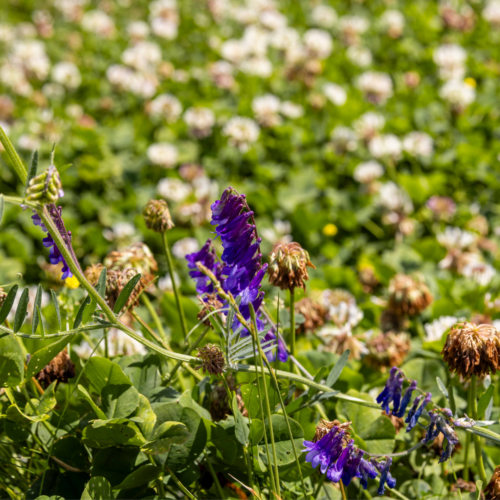
Clover Plus also carries a range of low growing wildflowers alongside the clover, including black medick, bird’s foot trefoil and common vetch.
An eco-friendly lawn is about more than water
Water is the immediate concern this summer, but the case for clover turf holds up outside a drought too.
- It feeds itself
- Clover fixes nitrogen from the air into the soil, which means less need for synthetic fertiliser, and less fertiliser running off into watercourses
- It feeds pollinators
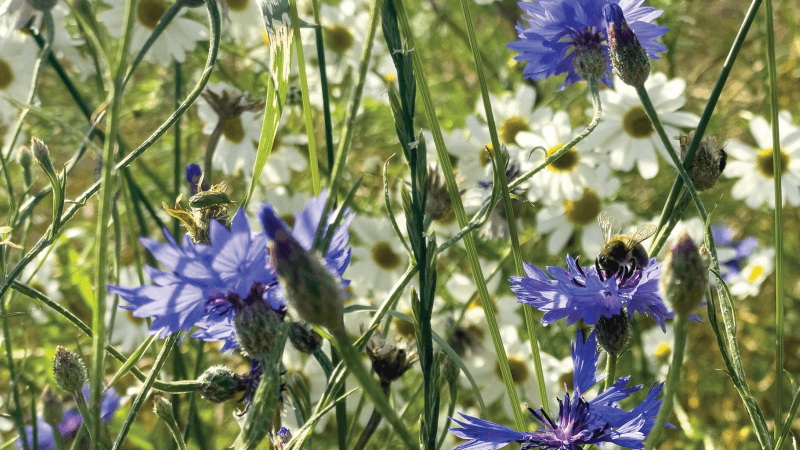
- Clover flowers are a reliable nectar source
- The wildflowers in Clover Plus extend that further, and they flower at different points in the season, so the supply does not stop in June
- Bird’s foot trefoil in particular supports species that clover alone does not
- It needs cutting less often than a conventional lawn
- Less often, not never
- Clover turf still needs mowing, just at a lower frequency
- It is grown without plastic
- Our turf is field grown and matured without plastic webbing, so laying it does not introduce microplastics into your soil or onto the marine environment
If you are under a hosepipe ban right now
Established lawns do not need rescuing. Let them go dormant, raise the mower, stay off them as much as you can, and leave them alone. They will come back.
Newly laid turf is different, and this is where the exemptions matter. Water companies sometimes permit watering of newly laid turf for a limited period after installation, subject to conditions. Check the exemptions listed by your own supplier before you assume you are covered, and keep evidence of your installation date.
If you are planning to lay turf, autumn and spring are the best time of year to do this, as the soil is cooler and more reliable rainfall make establishment far easier than a summer installation.
Frequently asked questions
What is the most drought resistant lawn in the UK?
A grass and clover mix is the most drought resistant option for most UK gardens. Clover roots deeper than lawn grass, so it reaches moisture the grass cannot and stays green for longer in dry conditions. Deep-rooted fescues also perform better than ryegrass-heavy mixes.
Does a clover lawn need watering?
An established clover lawn usually needs no watering at all, even in a dry summer. In extreme drought, if it starts to wilt, water deeply once a week rather than lightly every day. Frequent shallow watering encourages shallow roots and makes the problem worse.
Can I lay new turf during a hosepipe ban?
Usually yes, but only under an exemption. Water companies typically allow watering of newly laid turf for a limited window after installation, with conditions attached such as restricted hours and proof of the installation date. Check your supplier’s published exemptions before laying.
Will a drought resistant lawn still go brown?
It can, in a long enough dry spell. Drought resistant means it holds colour for longer and recovers faster, not that it is immune. Browning is dormancy rather than death, and the lawn will green up once rain returns.
Is clover turf better for the environment than grass?
Clover turf reduces the environmental cost of a lawn in three ways. It fixes its own nitrogen so needs less fertiliser, it needs far less water, and its flowers feed pollinators more than a grass monoculture offers.
Does a clover lawn need fertiliser?
No. Clover fixes nitrogen from the air into the soil, feeding both itself and the grass growing alongside it. Adding nitrogen fertiliser to a clover lawn is counterproductive, as it encourages the grass to outcompete the clover.
Is clover good for bees?
Yes. White clover is one of the most reliable nectar sources in a British garden, and it flowers across a long season. Adding low growing wildflowers such as bird’s foot trefoil and black medick supports a wider range of insects than clover alone.
Clover Plus is available now. Find out more about Clover Plus or get in touch to talk through what suits your site.