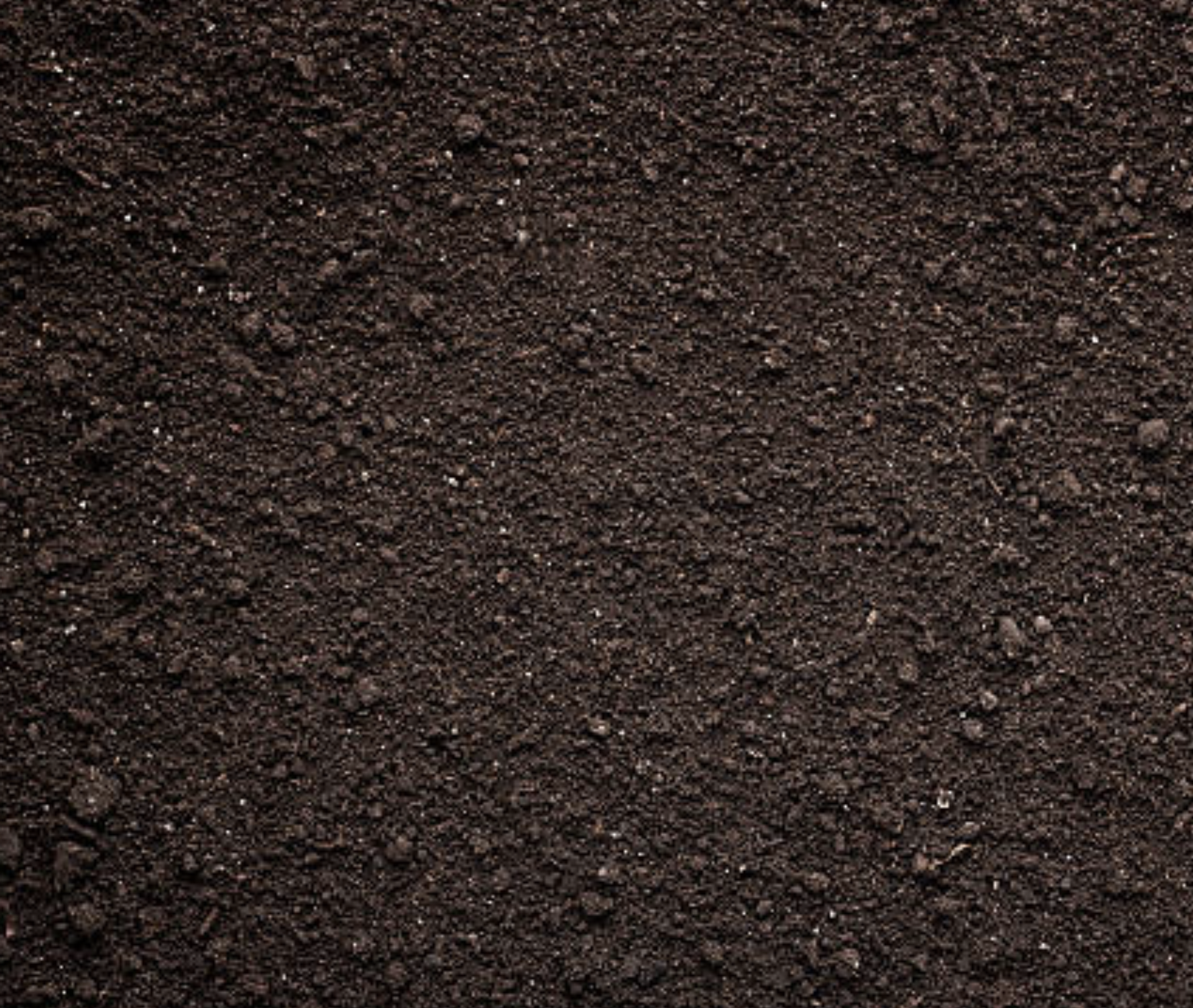
Sod heating destroys more turf on construction sites than most contractors realise. If you’re managing turf deliveries alongside an unpredictable build programme, understanding what causes sod heating and how to prevent it could save you thousands in wasted material, repeat deliveries and programme delays.
What causes sod heating?
Every roll of turf contains thousands of living grass plants and a community of micro-organisms in the soil. The moment turf is harvested and rolled, those plants lose access to light, fresh air and water.
The real damage comes from below the surface. Micro-organisms consume the available oxygen, and once it runs out, anaerobic organisms take over and generate significant heat as they grow. You’ll recognise the process if you’ve ever felt the warmth coming off a compost heap or a pile of grass clippings.
Rolled turf acts like an insulating blanket, trapping this heat inside. The centre of the pallet heats up fastest, because that’s where airflow is poorest and insulation is greatest. On a warm day, core temperatures can climb well above 50°C. At those temperatures, the grass doesn’t just suffer, it dies.
How quickly does sod heating develop?
In warm or humid conditions, sod heating can begin in as little as 12 hours. Even in milder weather, turf left on a pallet for 24 to 48 hours after harvest will start to deteriorate.
How to spot sod heating
The signs progress through distinct stages, and catching the problem early matters:
- Mild
- The grass appears yellow and floppy when you unroll it, and the roll feels warm
- At this stage, you can usually still lay the turf and it will recover with proper watering over a couple of weeks
- Moderate
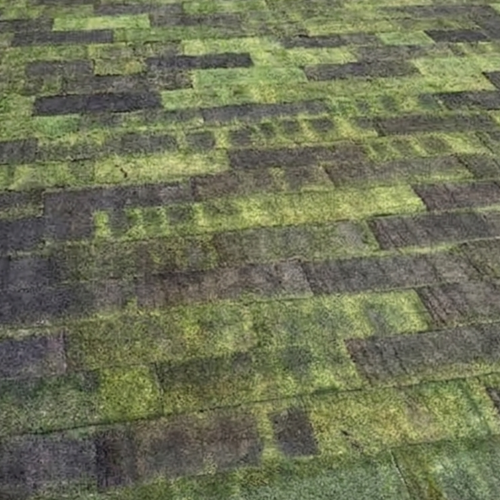
- Darker discolouration appears, sometimes with visible striping across the roll
- You’ll notice a silage-like smell
- Recovery is possible but patchy, and some areas may need replacing
- Severe
- The grass turns black or grey and ash-like, with a strong odour
- At this point the turf is dead and you’ll need to replace it entirely
One thing to watch for: dark colouring on the underside of a freshly unrolled piece is often just soil contact staining, which washes away when you water. True sod heating affects the grass blades themselves.
Why construction sites are high-risk
Most advice around sod heating assumes you can lay turf the same day it arrives. That’s realistic in a domestic garden, but on a live construction site, it often isn’t.
Soft landscaping sits at the end of the programme, which means it absorbs every delay from every trade that comes before it.
The typical scenario
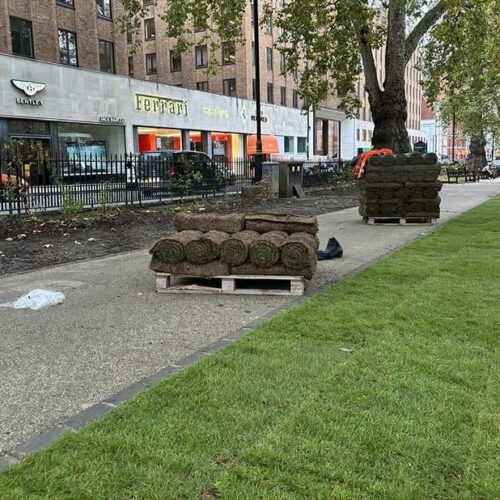
You’ve coordinated a turf delivery for Thursday, timed to your crew’s availability and the build programme. On Wednesday afternoon, the paving contractor tells you they’ve overrun and your area isn’t accessible. The turf is already cut and loaded.
Now you’re facing a perishable delivery with nowhere ready to receive it. The costs compound quickly: wasted turf, double delivery charges, idle crew time and potential delays to handover. Most turf suppliers are clear in their terms that turf must be laid promptly, so the liability for sod heating caused by site delays typically falls on the contractor.
How chilled turf delivery changes the equation
At Grasslands, when turf is harvested in warmer weather it goes straight to our chiller facility, where pallets are loaded into a vacuum chiller that brings the core temperature down to 3°C.
This process prolongs the turf’s shelf life by a minimum of 24 hours, which is crucial during warmer months when the window for laying unchilled turf can be as narrow as 12 hours.
We don’t charge any extra for this. We couldn’t imagine doing it any other way.
What this means in practice
That extra time opens up real flexibility for contractors:
- Schedule two days’ work from a single delivery
- Rather than needing a fresh delivery each day, chilled turf gives you the option to take one larger delivery and lay across two days, saving a delivery charge and simplifying site logistics
- Absorb short programme delays without losing material
- If prep work overruns or site access is delayed, chilled turf gives you breathing room that standard turf simply doesn’t
- Reduce waste and reorder costs
- Fewer pallets lost to sod heating means fewer emergency reorders, less disruption to your programme and lower overall material costs
Chilling doesn’t make turf indestructible: it’s still a living product and you should lay it as soon as you practically can. But the difference between a 12-hour window and a 36-hour-plus window is enormous on a live site.
How to store turf on site: standard vs chilled
This is where things get interesting, because the correct storage advice for chilled turf directly contradicts the standard recommendations you’ll find elsewhere.
Storing standard (unchilled) turf
With standard turf, the priority is releasing heat and maximising airflow:
- Break pallets down into smaller stacks so air circulates around the rolls (good in principal, but time consuming in practice)
- Store in shade and away from hot surfaces like tarmac or concrete (not always possible on live construction sites)
- Never cover turf with sheeting (tarpaulins trap heat and moisture, creating a microclimate that accelerates sod heating)
- Never water turf while it’s still rolled up (moisture promotes microbial growth and increases heat generation)
Storing chilled turf
Chilled turf has already had its core temperature brought down to 3°C, so the goal shifts from releasing heat to retaining cold:
Keep pallets grouped tightly together
- This helps maintain the low temperature across the delivery by reducing the surface area exposed to warm ambient air
Cover pallets with blankets or insulating material
- Unlike standard turf, where covering traps damaging heat, covering chilled turf helps preserve the cold temperature for longer
Store in shade where possible
- This applies to both chilled and standard turf, as direct sunlight will warm pallets regardless
Still never water turf while it’s rolled up
- This rule applies universally, whether the turf is chilled or not
These first two points (grouping tightly and covering with blankets) go against virtually every piece of generic turf storage advice you’ll read online. That advice is written for standard turf, where the problem is heat building up inside. With chilled turf, you’ve already solved that problem at source, and the priority becomes keeping the cold in.
More practical tips for handling turf on site
- Coordinate deliveries with your site programme as closely as possible
- The tighter you can keep the gap between the ground being ready and the turf arriving, the better your results will be – and chilled turf gives you more tolerance when that gap widens
- Communicate realistic laying windows to your supplier
- If you know there’s a risk of site access delays, discuss this when placing your order
- A supplier who chills their turf can factor this into dispatch planning
- Lay turf progressively
- If you have a large delivery, get turf off the pallet and onto prepared ground in stages
- Photograph problems immediately
- If you unroll turf and find evidence of sod heating, document it and contact your supplier straight away

Frequently asked questions about sod heating
What is sod heating?
Sod heating occurs when micro-organisms in rolled turf consume oxygen and generate heat. Because the roll traps this heat like insulation, temperatures build up and damage or kill the grass. The process can begin within 12 to 48 hours of harvest, depending on ambient temperature, and the centre of the pallet heats up fastest.
How long can turf sit on a pallet?
Standard turf can start deteriorating within 12 hours in warm conditions, or 24 to 48 hours in cooler weather. Chilled turf that has been vacuum-cooled to 3°C at the core gains a minimum of 24 additional hours, giving contractors a realistic window to lay across two days from a single delivery.
Can turf recover from sod heating?
Mild cases where the grass has yellowed but not turned black or grey are usually recoverable. Once you’ve laid the turf, water it thoroughly and keep foot traffic off it for at least two weeks. Severe cases where the grass has turned black or grey with a strong smell are generally not recoverable.
Should I water turf on the pallet to cool it down?
No. Watering rolled turf accelerates microbial activity and increases heat generation. This applies to both standard and chilled turf. Only water turf once you’ve unrolled and laid it on prepared ground.
Why is sod heating worse on construction sites?
Landscaping typically falls at the end of the build programme, making it vulnerable to delays from other trades. Unlike a domestic garden, contractors can’t always guarantee the ground will be ready when the turf arrives. Chilled delivery provides a practical buffer against these delays.
How should I store chilled turf if I can’t lay it straight away?
Keep pallets grouped tightly together in the shade, and cover them with blankets or insulating material to retain the cold temperature. This is the opposite of the advice for standard turf, where you’d break pallets apart for airflow. With chilled turf, the goal is to keep the cold in, not let heat out.
Grasslands is a Kent-based turf grower supplying contractors, landscapers and developers across the south east. We chill our turf before dispatch during warmer months as standard, giving you a real buffer against site delays. Get in touch to discuss your project, or find out more about our turf laying service.